
Consumer Report 2025 - GenAI, Social Commerce and Communities: What Consumers Truly Think
Download Resources
 Blog
Customer Reviews|E-commerce
The 10 Best Ecommerce Reviews Platforms in 2026 (Ranked by Conversion Impact)
Blog
Customer Reviews|E-commerce
The 10 Best Ecommerce Reviews Platforms in 2026 (Ranked by Conversion Impact)
 Index
Index
Afficher plus
Afficher moins

The 10 Best Ecommerce Reviews Platforms in 2026 (Ranked by Conversion Impact)
 22
mn
22
mn
par
Asmita


Ninety-eight percent of online shoppers read reviews before buying. That number hasn’t moved in three years — because it’s already at saturation. What has moved is how aggressively the gap between brands withstrong review strategies and those without one shows up in conversion data.
If you’re running a mid-market ecommerce brand and you still treat customer reviews as a passive channel — something that just “happens” after a purchase — this guide is for you. We’ve ranked the 10 best ecommercereviews platforms by what actually matters: verified authenticity, distribution reach, tech stack compatibility, and measurable conversion impact.
Verified Reviews by Skeepers tops the list. Here’s the full breakdown.
Why Ecommerce Reviews Are Your Highest-ROI Channel
Let’s be direct: there are few marketing channels where a mid-market ecommerce brand can deploy a single platform integration and see measurable lift across acquisition cost, organic traffic, and on-site conversion simultaneously. Review platforms are one of them.
The caveat is that not all review programs are equal. The difference between a well-configured verified review strategy and a passive open-submission setup isn’t marginal. It’s the difference between a channel thatcompounds over time and one that creates liability.
What the Data Says: Reviews and Conversion Rates
The conversion math is now well-documented. According to Spiegel Research Center, products with five or more reviews are 270% more likely to be purchased than products with none. But the effect doesn’t plateau — products with 26 to 50 reviews outperform those with fewer than five by an additional 15 to 25%. And for higher-ticket items? The lift reaches 380%, per data from PowerReviews.
Two numbers every ecommerce manager should have in their back pocket:
270% — conversion lift for products with 5+ reviews vs. none (Spiegel Research Center) | 17% — average CTR improvement when Google Seller Ratings activate on paid ads (Google)
For a brand spending $60,000 per month on Google Ads, that 17% efficiency gain alone can justify the cost of a review platform — before you count on-site conversion lift.
The Verified vs. Unverified Gap — Why It Matters in 2026
Google’s 2025 review quality update began demoting product pages with patterns associated with fake or incentivized reviews. The EU Omnibus Directive, now enforced in major markets, requires brands to disclose how reviews are verified or face financial penalties — and US state-level equivalents are following.
The commercial case is equally clear. According to Bazaarvoice’s 2025 Shopper Experience Index, up to 30% of reviews on open platforms are estimated to be fraudulent. Consumers have gotten better at detecting this: 62% say they actively look for signs that a review is verified. A review tied to a confirmed purchase simply converts better. Platforms that verify at source — matching the reviewer identity to a real transaction — outperformunverified systems by an average of 15 percentage points on conversion, per NielsenIQ data.
5 Must-Have Features in an Ecommerce Reviews Platform
Not every feature list is equal. These five separate workable platforms from genuinely high-performing ones.
Purchase Verification and Fraud Prevention
Purchase verification is the foundation, not a premium feature. A platform that collects reviews without confirming the reviewer made a purchase is collecting opinions, not validated customer intelligence. Look for AFNOR NF certification or equivalent third-party standards. Verified Reviews by Skeepers has held AFNOR NF certification since 2012, making it one of the few platforms with independently audited verification at scale.
Multi-Channel Syndication: From Your Site to Google, Meta, and Retailers
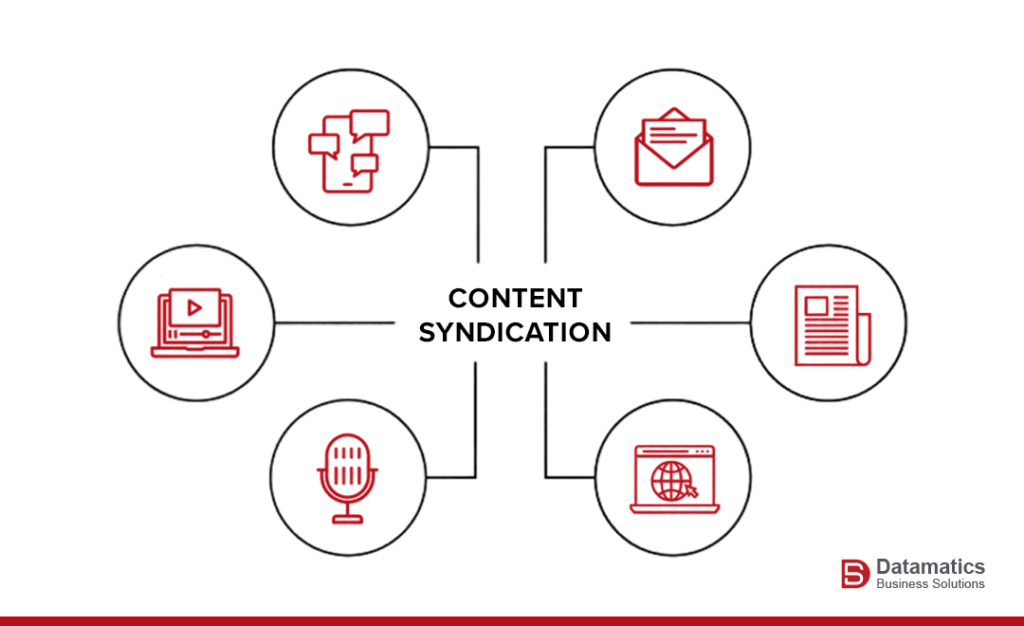
Reviews collected on your site are valuable. Reviews distributed to Google Shopping, Google Ads, Meta, TikTok, and retailer product pages are exponentially more valuable. That’s what syndication does. The bareminimum for 2026: a direct Google Seller Ratings feed. The better platforms cover Meta, TikTok, and retailer networks. This is the review activation layer — and it’s where most platforms underdeliver.
AI-Powered Sentiment Analysis and Reporting
Sentiment analysis has moved from “nice to have” to a core operational tool for brands managing more than a few hundred reviews per month. Modern platforms apply NLP to categorize review themes — shipping, product quality, customer service — and flag emerging issues before they compound. Platforms doing this well in 2026 go beyond simple positive/neutral/negative scoring: they identify attribute-level sentiment, trackthemes over time, and generate auto-summaries.
Integrations with Your Ecommerce Stack
A review platform that doesn’t integrate cleanly with Shopify, Magento, or Salesforce Commerce Cloud forces your team into manual processes that break at scale. Non-negotiables: native connectors to your OMS, yourESP (Klaviyo, Salesforce Marketing Cloud, Braze), and your CMS. Shopify merchants have the most choice. Magento and Salesforce Commerce Cloud integrations separate mid-market platforms from SMB tools.
Review Display Widgets and Rich Snippets
The collection and the display are two separate product problems. Display matters for SEO (rich snippets require valid schema markup), for CRO (widget design and placement affect conversion), and for brand coherence. At minimum: customizable product page widgets, a brand-level aggregate rating widget, and schema markup that validates cleanly in Google’s Rich Results Test. Boosting conversion through optimized display is as mucha function of the widget layer as of review volume.
The 10 Best Ecommerce Reviews Platforms in 2026
Ranked by conversion impact for mid-market B2C ecommerce brands. Evaluated across six criteria: verification rigor, syndication reach, AI analytics, ecommerce platform compatibility, pricing model, and documentedconversion lift.
1. Verified Reviews by Skeepers — Best for Verified Authenticity + Omnichannel Reach

Verified Reviews by Skeepers sits at the top of this list for a specific reason: it’s the only platform in this comparison that combines AFNOR NF-certified purchase verification, direct Google Seller Ratings syndication, and omnichannel distribution (Google, Meta, TikTok, and retailer networks) in a single integration.
For mid-market brands running on Shopify, Magento, or Salesforce Commerce Cloud, the operational case is direct. Review collection is automated through post-purchase email, SMS, and WhatsApp sequences. Every submission is tied to a confirmed transaction before it’s published. The AI reporting layer tags themes, tracks sentiment trends, and surfaces Voice of Customer data that’s genuinely useful beyond marketing.
Best for: Mid-market B2C brands prioritizing verified authenticity, regulatory compliance, and multi-channel distribution. Particularly strong for brands with significant Google Ads spend or retailer distribution.
Ecommerce platforms: Shopify, Magento, Salesforce Commerce Cloud, WooCommerce, PrestaShop, custom API.
2. Yotpo — Best All-in-One for Mid-Market Shopify Brands
Yotpo is the broadest platform in this list in terms of feature scope. Beyond reviews, it covers loyalty programs, SMS marketing, and UGC management — which makes it attractive to brands that want to consolidatevendors. The review collection engine is solid, with automated post-purchase requests and a serviceable moderation layer.
The trade-off is complexity and cost. At mid-market scale, Yotpo pricing escalates quickly, and the breadth of features can become noise for teams whose core need is reviews and syndication. For Shopify-native brands that also want loyalty and SMS in the same platform, Yotpo makes sense.
Best for: Mid-to-large Shopify brands wanting reviews, loyalty, and SMS in a single vendor relationship.
3. Bazaarvoice — Best for Enterprise and Multi-Retailer Programs
Bazaarvoice built its market position around retailer syndication, and that remains its strongest differentiator. For brands that sell through major retailers — Target, Walmart, Best Buy — Bazaarvoice’s retailer network isunmatched. Reviews collected on your DTC site flow directly to retailer product pages.
The ceiling: Bazaarvoice is an enterprise product priced accordingly. Mid-market brands without significant retailer distribution will find themselves paying for network access they don’t fully use. The right choice for enterprise CPG brands; harder to justify for mid-market DTC-first brands.
Best for: Enterprise and upper-mid-market brands with significant multi-retailer distribution.
4. PowerReviews — Best for Retailers and Brand Manufacturers
PowerReviews has a strong track record with brand manufacturers and mid-market retailers who need sampling programs alongside standard post-purchase collection. The platform supports product sampling for pre-launch review seeding. Syndication to Google is available but less comprehensive than Verified Reviews or Bazaarvoice.
Best for: Brand manufacturers and retailers running pre-launch sampling programs alongside standard collection.
5. Okendo — Best for Data-Driven Shopify Brands Using Klaviyo
Okendo’s differentiation is attribute data. Beyond standard star ratings, it collects structured customer attributes — fit, sizing, skin type, use case — that enrich both review display and segmentation. For brands alreadyrunning Klaviyo, the integration is tight: attribute data flows into Klaviyo profiles, enabling review-based segmentation for email flows. The Shopify-only constraint is genuine.
Best for: Data-driven Shopify brands with mature Klaviyo operations.
6. Reviews.io — Best for Independent Third-Party Verification
Reviews.io positions itself around independent verification and is a solid mid-market choice for brands where third-party credibility is a priority. The platform collects both product and company-level reviews. Google Seller Ratings integration is available and well-documented. Pricing is transparent and mid-market-friendly.
Best for: Mid-market brands prioritizing independent third-party review credibility.
7. Stamped — Best for BigCommerce and Multi-Channel Mid-Market
Stamped has built a meaningful position in the BigCommerce ecosystem, where native review app choice is narrower than Shopify. The platform covers reviews, loyalty, and referrals in a bundled offering. Reviewcollection mechanics are solid, with email and SMS request flows. For BigCommerce operators or brands wanting a review-plus-loyalty bundle at mid-market pricing, Stamped is a legitimate choice.
Best for: BigCommerce merchants and multi-channel brands wanting review plus loyalty in one platform.
8. Judge.me — Best Budget Option for Shopify Stores
Judge.me is the category leader for budget Shopify review apps, and it earns that position honestly. The free plan is genuinely functional: automated email requests, product review display, photo and video collection, and basic schema markup. The paid plan ($15/month flat) adds Google Shopping syndication. There’s no purchase verification via confirmed-transaction matching — for high-volume or regulatory-sensitive brands, thatmatters.
Best for: Small-to-mid Shopify stores with budget constraints and sub-enterprise requirements.
9. Loox — Best for Visual UGC on Shopify
Loox focuses on photo and video reviews, making it the default choice for visual-first brands — fashion, beauty, home decor — where showing the product in use matters as much as the written review. The collection flow is optimized for visual submissions, with incentive mechanics for photo-accompanied reviews. Google integration exists but is narrower than dedicated review platforms.
Best for: Visual-first Shopify brands (fashion, beauty, home goods) where photo and video UGC drives conversion.
10. WiserReview — Best for Multi-Platform Stores
WiserReview’s differentiator is platform agnosticism. It works across Shopify, WooCommerce, BigCommerce, Wix, and Squarespace from a single dashboard. Collection channels include email, SMS, WhatsApp, and QR codes. The syndication layer and AI analytics are more limited than enterprise-tier platforms, but for multi-platform operators who need cross-storefront review management without enterprise pricing, WiserReview fills a real gap.
Best for: Multi-platform stores running parallel storefronts on different ecommerce platforms.
See how Verified Reviews by Skeepers combines purchase verification, omnichannel syndication, and AI analytics in a single platform. Request a demo
Comparison Table: 10 Ecommerce Reviews Platforms at a Glance
Choosing a review platform for a mid-market ecommerce brand isn’t a features race — it’s a fit decision. The table below aligns each platform to the six criteria that determine real-world ROI: verification rigor, syndication reach, AI analytics quality, ecommerce stack compatibility, pricing structure, and primary use case.
| Platform | Verification | Syndication | AI Analytics | Platform Compat. | Pricing | Best For |
| VerifiedReviews by Skeepers | AFNOR NF certified | Google, Meta, TikTok, Retailers | Advanced | Shopify, Magento, SFCC, API | Mid / Enterprise | Verified auth + omnichannel |
| Yotpo | Post-purchasetiming | Google, somesocial | Advanced | Shopify, Magento, BigCommerce | Mid / Enterprise | All-in-one Shopify stack |
| Bazaarvoice | Moderation-based | Retailer network + Google | Advanced | Enterprise platforms | Enterprise | Multi-retailerCPG |
| PowerReviews | Purchase confirmation | Google + retailers | Intermediate | Shopify, Magento, SFCC | Mid / Enterprise | Sampling + collection |
| Okendo | Purchase confirmation | Google Seller Ratings | Intermediate | Shopify only | SMB / Mid-market | Klaviyo-integratedShopify |
| Reviews.io | Independent 3rd-party | Google Seller Ratings | Basic-Intermediate | Shopify, BigCommerce | SMB / Mid-market | Independent credibility |
| Stamped | Purchase timing | Google + loyalty | Basic-Intermediate | Shopify, BigCommerce | SMB / Mid-market | BigCommerce + loyalty |
| Judge.me | Purchase timing | Google Shopping | Basic | Shopify | SMB (budget) | Budget Shopify |
| Loox | Purchase timing | Google Shopping | Basic | Shopify | SMB | Visual UGC Shopify |
| WiserReview | Purchase timing | Google richsnippets | Basic-Intermediate | Multi-platform | SMB / Mid-market | Multi-platform stores |
How to Choose the Right Ecommerce Reviews Platform
The comparison table shows features. This section helps you make the actual decision. Four questions will get you from ten options to two.
Step 1 — Define Your Core Goal First
Before you touch a vendor demo, answer this: what does success look like in 12 months? Not “more reviews” — that’s a metric, not a goal. Is it a measurable lift in conversion rate on product pages? Activation of Google Seller Ratings to reduce paid search cost-per-click? Regulatory compliance in a new market? A reduction in CX ticket volume from review-sourced product insights?
The answer determines the platform category. Conversion and Google distribution point toward Verified Reviews or Yotpo. Retailer syndication points toward Bazaarvoice. Independent credibility in a skeptical categorypoints toward Reviews.io. One goal, one platform.
Step 2 — Match the Platform to Your Tech Stack
This is often where mid-market brands get tripped up. A platform with the best syndication in the industry is a poor choice if its Magento connector was last updated two years ago. Ask vendors specifically: how many live Magento (or SFCC) implementations does your platform actively support? Native connectors to your ESP are equally important. Review collection performance depends on the quality of the trigger, timing, and channel mix — all of which require clean stack integration.
Step 3 — Calculate True 12-Month Cost at Scale
Platform pricing pages are written for the lowest-volume tier. Before signing, model the cost at your actual order volume, including review request volume, storage, and syndication fees. Platforms that charge per reviewrequest, per active SKU, or per syndication channel can look affordable at 1,000 orders per month and expensive at 20,000. Ask explicitly: what does pricing look like at 2x your current order volume?
Step 4 — Prioritize Verification and Regulatory Compliance
This is the criterion most mid-market brands underweight in 2026. The EU Omnibus Directive requires explicit verification disclosure. US FTC guidelines on endorsements are tightening. Google’s review quality signalsfavor platforms with documented verification processes. For brands with EU exposure, AFNOR NF certification or equivalent third-party audit is worth prioritizing. Improving online visibility through Google Seller Ratings specifically requires a Google-approved review partner — not every platform qualifies.
How Verified Reviews by Skeepers Stands Apart
Most review platforms can collect reviews. Fewer can verify them rigorously. Even fewer distribute them at scale across every channel where your customers make purchase decisions. Verified Reviews by Skeepers doesall three.
Verified at Source: Every Review Tied to a Confirmed Purchase
The verification layer in Verified Reviews is built into the collection step, not applied as a filter afterward. Each review request is triggered only after a confirmed purchase event, using order data from your ecommerceplatform. The reviewer’s identity is matched to the transaction before the review is accepted for publication. This isn’t moderation — it’s intake-level verification. The result is a review corpus that’s structurally cleaner thanopen-submission platforms, and that carries AFNOR NF certification to prove it, independently audited since 2012.
Omnichannel Distribution: Google, Meta, TikTok, and Retailers
The syndication architecture in Verified Reviews covers the full acquisition funnel. Verified reviews flow automatically to Google Seller Ratings, activating star scores on paid search ads and organic results. The samereviews feed Meta and TikTok ad formats. For brands with retailer distribution, direct retailer syndication carries product ratings from your DTC site to retail product pages. The compounding effect of omnichannel review distribution is real: a review collected once distributes trust signals across Google Search, Google Shopping, Meta Ads, TikTok Shop, and retailer listings simultaneously.
Ready to build a review program that actually compounds? Start collecting verified reviews today with Verified Reviews by Skeepers
FAQs
What are ecommerce reviews?
Ecommerce reviews are feedback left by verified customers about products or shopping experiences, published on product pages, review platforms, or search engines to influence purchase decisions.
In practice, ecommerce reviews are structured submissions tied to a real purchase or transaction. They appear on product pages, retailer sites, Google Shopping, and third-party platforms. For mid-market B2C brands, reviews serve three distinct functions: they build social proof that converts first-time visitors, they generate fresh user-generated content that improves organic search rankings, and they provide actionable Voice of Customer data for product and CX teams. In 2026, reviews tied to confirmed purchases drive 15% higher conversion lift than unverified counterparts, according to NielsenIQ. Brands treating customer reviews as passive marketing collateral consistently underperform on conversion rate and customer acquisition cost.
How do ecommerce reviews impact conversion rates?
Products with at least five reviews are 270% more likely to be purchased than products with none, with the effect compounding as review count grows.
The conversion impact of customer reviews is one of the most thoroughly documented levers in digital retail. Products with 26 to 50 reviews consistently outperform those with fewer, and verified reviews outperformunverified ones by 15% on average. For higher-ticket items, the lift reaches 380%, according to PowerReviews benchmarks. Store-level ratings — the aggregate star scores displayed in Google paid and organic search — improve ad CTR by an average of 17%, directly reducing cost-per-click. For a mid-market brand spending $50,000 per month on Google Ads, that efficiency gain represents meaningful ROI without increased spend. The compound effect makes review collection one of the highest-ROI activities in the ecommerce marketing stack.
What is the difference between verified and unverified reviews?
Verified reviews are confirmed against a real purchase; unverified reviews can come from anyone, including competitors or incentivized posters, creating both fraud risk and regulatory exposure.
Verified reviews are collected by a platform that confirms each reviewer against an actual transaction before the review is published. Unverified reviews are open submissions that anyone can leave regardless of purchasehistory. According to Bazaarvoice’s 2025 Shopper Experience Index, up to 30% of reviews on open platforms are estimated to be fraudulent. Google’s 2025 review quality updates began deprioritizing pages with low-quality review signals. Platforms like Verified Reviews by Skeepers build verification into the collection step, ensuring every published review is tied to a confirmed buyer and protected by AFNOR NF certification.
How do I collect more customer reviews for my ecommerce store?
The fastest method is automated post-purchase email or SMS review requests sent 7 to 10 days after delivery, personalized with the product name and a direct submission link.
Collecting ecommerce reviews at scale requires automation. The most effective approach is a timed post-purchase sequence: a first request 7 to 10 days after delivery confirmation, followed by a single reminder five dayslater for non-respondents. Personalization matters — emails referencing the exact product purchased convert at roughly twice the rate of generic review requests. SMS adds 6 to 10 percentage points, WhatsApp addsanother 5 to 8 points. Building this workflow into post-purchase automation through Klaviyo, Salesforce Marketing Cloud, or native integrations within a review platform is the most scalable approach. Verified Reviews by Skeepers automates the full sequence across email, SMS, and WhatsApp with minimal setup.
What is review syndication and why does it matter for ecommerce?
Review syndication automatically distributes your customer reviews to external channels — Google Shopping, Meta Ads, retailer sites — multiplying their impact beyond your own product pages.
Without syndication, reviews live only on your site — useful for on-site conversion but invisible on Google Search, Google Shopping, paid ads, and retailer product listings. Syndication to Google activates Google Seller Ratings, star scores that appear under Google Ads and improve click-through rate by 17% on average. Syndication to Meta and TikTok enriches social ads with real customer proof, typically reducing cost-per-acquisition. For mid-market brands distributing through multiple retailers, review syndication ensures product ratings flow from your DTC site to third-party listings, creating a consistent trust signal across the full purchase funnel.
How do fake reviews affect ecommerce brands?
Fake reviews distort ratings, erode consumer trust, and — since recent regulatory updates — expose brands that use them to financial penalties in multiple jurisdictions.
Brands that purchase fake positive reviews gain a temporary sales lift — studies show a 12.5% boost in the first two weeks — but face compounding exposure. Thirty percent of reviews on open platforms are estimated to be fraudulent, and consumers are increasingly skeptical of perfect scores. Google’s 2025 algorithm updates began penalizing pages with suspicious review patterns, and the EU Omnibus Directive now mandates reviewauthenticity verification. For mid-market brands, investing in a verified review collection platform eliminates fraud exposure while delivering stronger, more durable conversion lift than inflated unverified ratings.
How do ecommerce reviews improve SEO?
Customer reviews improve SEO by generating fresh user-generated content, enabling rich snippets with star ratings in search results, and feeding Google Seller Ratings that increase click-through rate on both paid and organic listings.
Reviews contribute to ecommerce SEO through three mechanisms. First, each new review adds fresh, keyword-rich content to a product page without editorial effort — Google crawls and indexes this content, helpingpages rank for long-tail queries. Second, review schema markup enables star ratings to appear in organic search results as rich snippets, improving CTR by 10 to 25% versus standard listings, according to Search Engine Land. Third, reviews collected through a Google-approved partner like Verified Reviews by Skeepers feed directly into Google Seller Ratings — aggregate star scores displayed on both paid ads and organic results sinceOctober 2024. For mid-market ecommerce brands managing large product catalogs, combining product-level reviews with store-level Seller Ratings creates a compounding SEO and paid search advantage.