



Consumer Report 2025 - GenAI, Social Commerce and Communities: What Consumers Truly Think
Download Index
Index
Afficher plus
Afficher moins

Guide to Google Seller Ratings for companies
 12
mn
12
mn
par
Asmita


Google Seller Ratings have become one of the most powerful trust signals in paid search. Those small star ratings that appear beneath your Google Ads can significantly influence whether a shopper clicks or scrolls past. A study conducted by Dimensional Research found that 90% of consumers report that online reviews influence their purchasing decisions. And as per Google, showing seller ratings on your ads can boost click through rate (CTR) by 10%.
In this guide, we’ll break down how Google Seller Ratings work, the eligibility requirements you need to meet, how they impact click-through rates and sales, and how to successfully integrate and optimize them for your business.
What Are Google Seller Ratings?

Google Seller Ratings are an automated extension in Google Ads that display a star rating (out of five) alongside the total number of reviews your business has received. They are designed to reflect the overall customer experience with your company, not just a single product, and help shoppers quickly assess your credibility before clicking.
Definition and How They Appear in Google Ads
Google Seller Ratings typically appear as a row of yellow stars beneath your paid search ads, accompanied by your average rating and the number of reviews collected. This visual trust signal shows up automatically in eligible Search and Shopping ads, making your listing stand out and providing instant social proof directly in the search results.
Difference Between Google Seller Ratings and Product Ratings
Seller Ratings evaluate your business as a whole, focusing on overall customer satisfaction, service quality, and purchasing experience.
Product Ratings, on the other hand, relate to individual items and reflect feedback about a specific product’s performance, features, or quality. In short: Seller Ratings measure your brand’s online reputation, while Product Ratings measure product-level satisfaction.
What the Star Score Represents
The star score represents the average rating your business has received from verified customer reviews collected by Google or approved third-party providers. It is calculated on a five-star scale and reflects factors such as delivery experience, customer service, and overall shopping satisfaction.
A higher star score signals reliability and trustworthiness which is a key driver of click-through rate and conversion performance.
How to Collect Google Seller Ratings
Google aggregates Google Seller Ratings from trusted third-party review platforms as well as its own review collection programs, such as Google Customer Reviews. It compiles feedback from verified post-purchase experiences and calculates an overall score for your business.
How Many Reviews Do You Need?
To display Google Seller Ratings, Google requires a minimum number of recent, eligible reviews within a 12-month period. While the exact threshold may vary by country, companies generally need at least 100 verified reviews in the same country where the ads are shown.
In addition to volume, your average rating must typically be 3.5 stars or higher. If you don’t meet these thresholds, your Google Seller Ratings won’t appear even if you’re actively running Google Ads.
Eligibility Criteria You Must Meet
To qualify for Google Seller Ratings, companies must meet several key requirements. These include reaching the minimum review threshold, maintaining an average rating that meets the search engine’s standards, and ensuring reviews are collected through approved sources.
Additionally, your Google Ads account must be properly set up and active, and your business information must be consistent across platforms. Even small inconsistencies in business name, domain, or country targeting can prevent your Google Seller Ratings from appearing. Meeting these criteria ensures your reviews are eligible to be aggregated and displayed in your ads.
How to Submit Your Ratings to Google
Google Seller Ratings are not manually uploaded inside your Google Ads account. Instead, ratings must be submitted to Google through approved review sources that are part of the search engine’s Seller Ratings program.
There are two primary ways this happens:
- By using Google Customer Reviews directly, where Google collects post-purchase feedback on your behalf.
- By working with a Google-supported third-party review provider that automatically aggregates and shares your verified review data with Google.
If you collect reviews independently without an approved integration, Google cannot use them for Google Seller Ratings. That’s why ensuring your review solution is recognized and technically integrated with Google is essential. Once the data feed is active and you meet the required thresholds, Google Seller Ratings are displayed automatically, there is no manual activation button.
Why Working With a Google Supported Partner Helps
Working with a Google-supported partner simplifies the entire process. Instead of managing technical feeds, compliance requirements, and submission formats yourself, an approved provider ensures your verified reviews are structured correctly and transmitted to Google in line with its policies.
Beyond eligibility, a supported partner helps you scale review collection, maintain consistent data formatting, and avoid common errors that prevent ratings from appearing. In short, it removes friction allowing you to focus on generating authentic customer feedback while ensuring that feedback translates into visible performance in your Google Ads.
Common Pitfalls That Prevent Your Ratings From Showing Up
Many companies assume that once they collect reviews, their Google Seller Ratings will automatically appear in Google Ads. In reality, several common issues can prevent ratings from being displayed even if you’rerunning active campaigns.
Common pitfalls include:
- Not meeting the minimum review threshold within the required 12-month period
- Maintaining an average rating below the search engine’s required benchmark
- Insufficient recent reviews in the specific country where your ads are shown
- Inconsistent business information, such as mismatched business name or domain between your Google Ads account and review provider
- Technical feed or integration errors that prevent Google from aggregating your data
- Using a review platform that is not Google-approved for Google Seller Ratings
Even when all criteria are met, it may take time for Google to process and display your ratings. Ensuring consistent review collection, proper integration, and alignment with the search engine’s policies is key to maintainingcontinuous visibility.
Verified Reviews Integration With Google
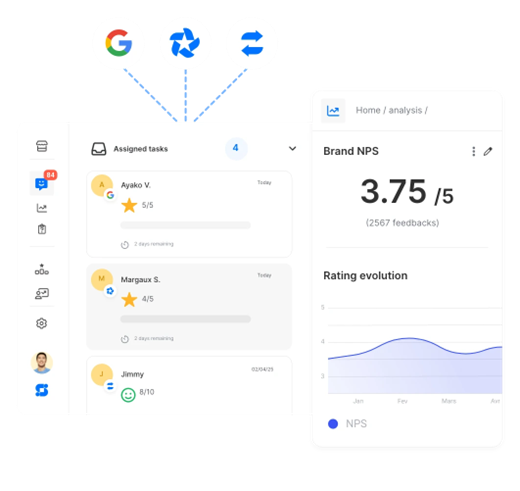
Verified Reviews integrates directly with the search engine’s Seller Ratings program, allowing companies to automatically share eligible, verified customer feedback with Google. This means the reviews you collect after a confirmed purchase can contribute to your Google Seller Rating without manual uploads or complex technical setup.
Through its partnership with Google, Verified Reviews helps strengthen your brand’s visibility and performance across key Google surfaces.
With this integration:
- Verified Reviews connects directly with your Google Business Profile (GBP), enabling you to collect customer reviews straight on your GBP listing.
- Your verified reviews can appear as star ratings within Google Rich Snippets, increasing visibility in organic search results.
- Your reviews are displayed directly on product listings in Google Shopping results, adding social proof at the moment of purchase intent.
By ensuring your review data is properly structured and shared with Google, Verified Reviews helps transform customer feedback into enhanced search presence and improved click-through performance.
Beyond basic eligibility, the integration is designed to support scale and consistency. Automated review collection helps maintain steady review volume, while compliance checks ensure data quality and authenticity.
How to Generate More Verified Reviews
Generating a consistent flow of verified reviews is essential if you want to qualify for and maintain Google Seller Ratings. Volume matters, but so does authenticity and recency. The goal is to build a steady, scalable review engine that continuously feeds fresh customer feedback into your ecosystem.
Rather than relying on occasional manual requests, companies that perform best treat review collection as an automated, integrated part of the post-purchase journey.
Automating Review Requests for Higher Volume
Automation is the most effective way to increase review volume without adding operational burden. By triggering review requests automatically after a confirmed purchase, you ensure every customer has the opportunity to leave feedback.
Timing also plays a crucial role. Sending review invitations shortly after product delivery when the experience is still fresh significantly improves response rates. Automated reminders can further boost participation without overwhelming consumers.
With a structured, automated approach, review collection becomes predictable and scalable, helping you consistently meet the search engine’s volume thresholds.
Syndication: Getting Your Reviews on Google

Collecting reviews is only part of the equation. To impact your Google Seller Ratings, those reviews must be shared through approved channels.
Syndication ensures your verified reviews are transmitted to Google in the correct format and through recognized integrations. This allows the search engine to aggregate your ratings and display them in Search Ads, Shopping results, and other eligible placements.
By combining automated collection with proper syndication, you create a closed loop where consumer feedback is captured efficiently and then amplified across the search engine’s ecosystem.
Monitoring and Optimizing Your Seller Rating Performance
Earning Google Seller Ratings is only the first step. To maintain visibility and maximize performance, companies must actively monitor their rating health and continuously optimize their review strategy. Because Google Seller Ratings directly influence click-through rates and conversion behavior, even small changes in your average score or review volume can impact campaign results.
Ongoing tracking ensures you use them as a strategic growth lever.
Monitoring Your Seller Rating Performance
Regular monitoring helps you stay ahead of potential issues that could cause your ratings to disappear. Key metrics to track include:
- Your average star rating
- Total number of eligible reviews within the last 12 months
- Review volume by country (if you advertise internationally)
- Trends in positive vs. negative feedback
It’s also important to periodically check whether your Google Seller Ratings are actively appearing in your ads. If they disappear, reviewing thresholds, integration status, or recent feedback trends should be your first step.
Consistent monitoring allows you to protect your visibility and maintain performance stability.
How to Respond to Reviews the Right Way
Responding to reviews, especially negative ones, plays a critical role in protecting your overall rating. A thoughtful, professional response demonstrates accountability and shows prospective consumers that you value feedback.
When responding:
- Acknowledge the consumer’s experience
- Provide a clear, solution-oriented reply
- Avoid defensive language
- Move complex issues offline when appropriate
Timely responses can improve consumer satisfaction and, in some cases, encourage updated ratings. More importantly, they signal transparency and professionalism to future buyers.
Using Ratings to Improve Your Customer Experience
Google Seller Ratings are not just a marketing asset, they are a real-time feedback loop. Patterns in reviews often highlight recurring friction points such as delivery delays, product expectations, or consumer support challenges.
By analyzing trends in your ratings and comments, you can identify operational improvements that directly impact consumer satisfaction. Addressing these issues not only strengthens your online reputation but also increases the likelihood of higher future ratings.
In this way, optimizing your Seller Rating performance goes beyond visibility; it becomes a driver of long-term consumer experience and business growth.
Examples of High Google Seller Ratings
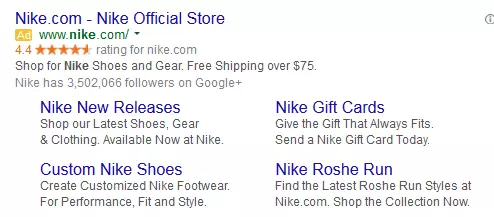
Companies with consistently high Google Seller Ratings, typically 4.5 stars and above share common strategic habits. They don’t treat reviews as a passive outcome but they actively build and protect their rating performance.
High-performing brands usually:
- Maintain a steady flow of recent reviews, ensuring they consistently meet the search engine’s 12-month threshold
- Automate post-purchase review collection to avoid volume gaps
- Closely monitor feedback trends and act quickly on service issues
- Respond publicly and professionally to negative reviews
- Align operational improvements with recurring customer feedback
For example, ecommerce brands with 4.7–4.9 star ratings often prioritize fast shipping, transparent communication, and responsive consumer support the same themes that appear repeatedly in positive reviews. Their high Google seller ratings aren’t accidental; they are the result of consistent consumer experience management.
What sets these companies apart is not just volume, but consistency and recency. They understand that the search engine evaluates Google seller ratings dynamically. By maintaining continuous review generation and strong service standards, they ensure their Seller Ratings remain visible and continue to drive higher click-through rates and stronger conversion performance.
Ultimately, high Seller Ratings reflect operational excellence translated into visible trust signals at the exact moment consumers are ready to buy.
Best Practices Checklist for Google Seller Ratings
Google Seller Ratings are not a one-time setup they are the result of a consistent, structured review strategy. To maximize visibility and performance, companies should ensure they are meeting the key fundamentals:
- Maintain a steady flow of recent, verified review throughout the year
- Keep your average rating above the search engine’s minimum threshold
- Use a Google-supported review partner to ensure proper data submission
- Automate post-purchase review requests to scale volume efficiently
- Regularly monitor your rating performance and ad visibility
- Respond promptly and professionally to shopper feedback
- Use review insights to improve operational and shopper experience gaps
When managed strategically, Seller Ratings become more than star icons in search results. They become a measurable performance driver increasing click-through rates, strengthening buyer confidence, and reinforcing trust at the exact moment purchase decisions are made.
By combining consistent review generation, compliant integration, and ongoing optimization, companies can turn verified customer feedback into a powerful growth asset across the search engine’s ecosystem.
Conclusion
Google Seller Ratings are a powerful trust accelerator at the moment of purchase intent. When shoppers see strong star ratings backed by verified shopper feedback, they are more likely to click, engage, and convert. But earning and maintaining those ratings requires consistency: steady review collection, compliance with the search engine’s requirements, and continuous monitoring of performance.
By combining automated review generation, proper syndication, and ongoing optimization, companies can transform consumer feedback into measurable growth. In today’s competitive search market, Seller Ratings are a strategic advantage that drives visibility, credibility, and revenue.